

Data integrity is one of those topics that sounds simple until you are sitting in an audit room and someone asks: can you prove where this data came from?
That is where ALCOA matters. In pharma, biotech, medtech, laboratories, and clinical operations, data is not just a record of work already done. It is the evidence used to release batches, support regulatory submissions, investigate deviations, approve suppliers, and protect patients.
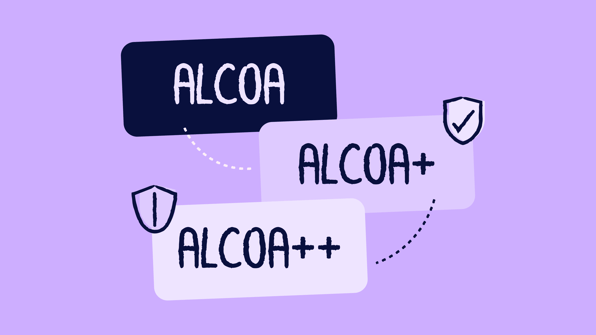
The ALCOA principles give quality teams a practical way to define whether data can be trusted. Over time, ALCOA expanded into ALCOA+ and then ALCOA++, mainly because regulated companies began working with more electronic records, more connected systems, and more outsourced processes.
In this guide, we will explain what ALCOA means, how ALCOA+ and ALCOA++ build on it, and how life sciences teams can apply these ideas inside a quality system.
Key takeaways
What is ALCOA?
ALCOA is a set of data integrity principles used across regulated industries. In life sciences, it helps teams decide whether records are reliable enough to support GxP decisions.
The idea is simple. If data cannot be traced, read, timed correctly, linked to the original source, and shown to be accurate, then it may not be trustworthy.
I have seen this play out in audits where the issue was not the underlying science. The problem was the record. A test had been performed, but the worksheet had unclear initials. A result had been reviewed, but the correction had no reason attached. A file existed, but no one could show whether it was the original version. In each case, the data became harder to defend because one part of ALCOA had been missed.
That is why ALCOA is still so useful. It gives QA teams, compliance managers, and operational teams a shared language for what good data should look like.
One review published by the Food and Drug Law Institute found that FDA cited data governance or data integrity failures in 60–80% of pharmaceutical warning letters issued to both domestic and foreign sites over a three-year period. The same review noted recurring problems such as unvalidated computer systems, weak access controls, and failure to review original electronic data, including audit trails.
That is exactly where ALCOA becomes practical. It gives QA teams a simple way to ask whether a record can be trusted before an auditor has to ask the same question.
Introduction to Data Integrity


What does ALCOA stand for?
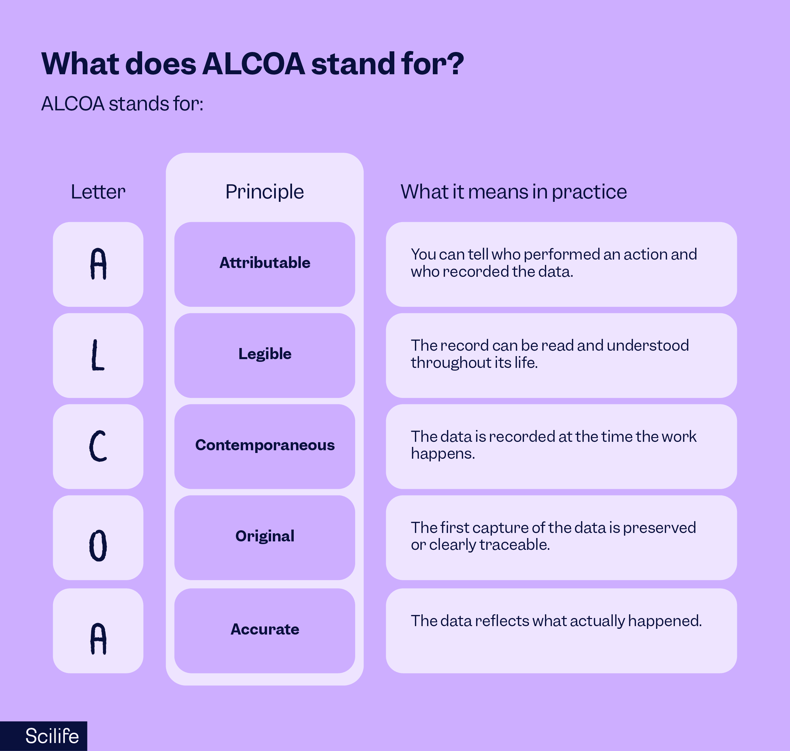
Attributable
Data must show who created it, changed it, reviewed it, or approved it. In paper records, this usually means initials, signatures, dates, and clear roles. In electronic systems, it means unique user accounts, audit trails, timestamps, and controlled permissions.
Shared logins are a common problem here. If five people use the same account, no one can confidently say who performed the action. That makes the record weak, even when the result itself is correct.
Legible
A record must remain readable. This applies to handwritten entries, scanned documents, electronic files, exported reports, metadata, and archived records.
Legible does not only mean that the handwriting is clear. It also means the record can still be understood years later. Abbreviations, overwritten entries, poor scans, broken links, and missing metadata all create problems.
Contemporaneous
Data should be recorded when the work is performed, not hours or days later from memory.
This matters because delayed recording creates room for error. In a lab, a batch record, or a deviation investigation, timing matters. Regulators expect the record to reflect the sequence of events as they happened.
Original
The original record must be preserved, or the copy must be certified and traceable to the original.
In electronic systems, the original may include metadata and audit trail information. A printed PDF may not be enough if it strips away system context. This is why QA teams should understand where the true original record lives.
Accurate
Data must be correct, complete for its intended use, and free from unexplained changes. Corrections should never hide the original entry. A good correction shows what changed, who changed it, when it changed, and why.
Accuracy is also about process design. If a system allows uncontrolled edits, weak review, or missing audit trails, then the data will always be harder to defend.
What is ALCOA+?
ALCOA+ expands the original ALCOA principles. It adds four expectations that help teams think beyond the first recording of data.
ALCOA+ includes:
- Complete
- Consistent
- Enduring
- Available
These additions matter because regulated records rarely stand alone. A single result may link to an instrument file, a method version, a sample ID, a deviation record, a batch record, and a release decision.
Complete
A record should include all data needed to understand the activity. This includes failed runs, repeats, calculations, review comments, audit trail entries, and supporting files.
A clean-looking final result is not enough if the supporting information is missing.
Consistent
Data should follow the expected sequence and use controlled formats. Dates, times, units, naming conventions, and workflows should make sense.
When records appear out of sequence, reviewers start asking questions. Did the work happen in the order shown? Was the result entered later? Was something changed after review?
Enduring
Records must last for the full retention period. Paper can fade or be misplaced. Electronic data can become unreadable when systems are retired.
This is where archiving and system lifecycle planning matter. If a company cannot retrieve a record during an inspection, then the record has little value.
Available
Records must be accessible when needed. QA, auditors, inspectors, and process owners should be able to retrieve the right record without hunting across personal drives, old systems, or unsupported file formats.
Availability is especially important during inspections. A record that exists but cannot be produced in time may still create a compliance concern.
What is ALCOA++?
ALCOA++ is a further extension of ALCOA+. It reflects how quality data is now created and managed in digital environments.
Different companies describe ALCOA++ slightly differently, but the idea is usually the same. Data integrity must also account for electronic systems, metadata, audit trails, system controls, and long-term digital access.
In practice, ALCOA++ asks teams to look at questions such as:
- Does the audit trail show meaningful activity?
- Are user permissions appropriate?
- Can metadata be reviewed with the record?
- Are system integrations controlled?
- Can data be retrieved after system upgrades?
- Are electronic signatures linked to the right records?
- Are time stamps synchronized and trustworthy?
This is where many modern quality teams are focusing more attention. A company may understand ALCOA well on paper, yet still struggle when records move across LIMS, eQMS, MES, ERP, document management tools, and cloud platforms.
ALCOA++ helps teams apply the same data integrity thinking to that wider digital reality.
ALCOA vs ALCOA+ vs ALCOA++: key differences
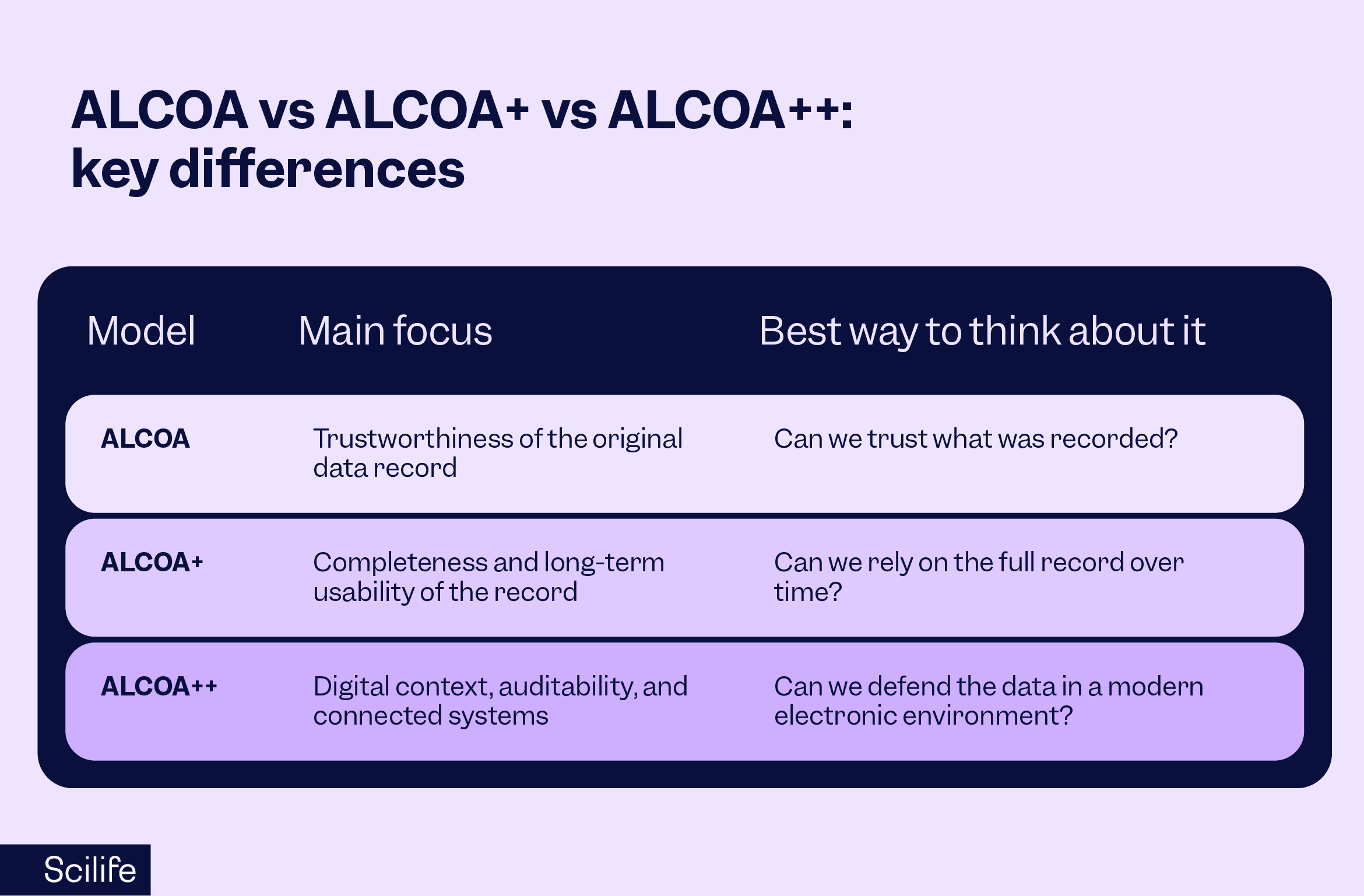
ALCOA gives the base principles. ALCOA+ makes the expectations more complete. ALCOA++ brings those expectations into today’s electronic quality systems.
The point is not to memorize three acronyms. The point is to build a quality system where data can be trusted without heroic effort during an audit.
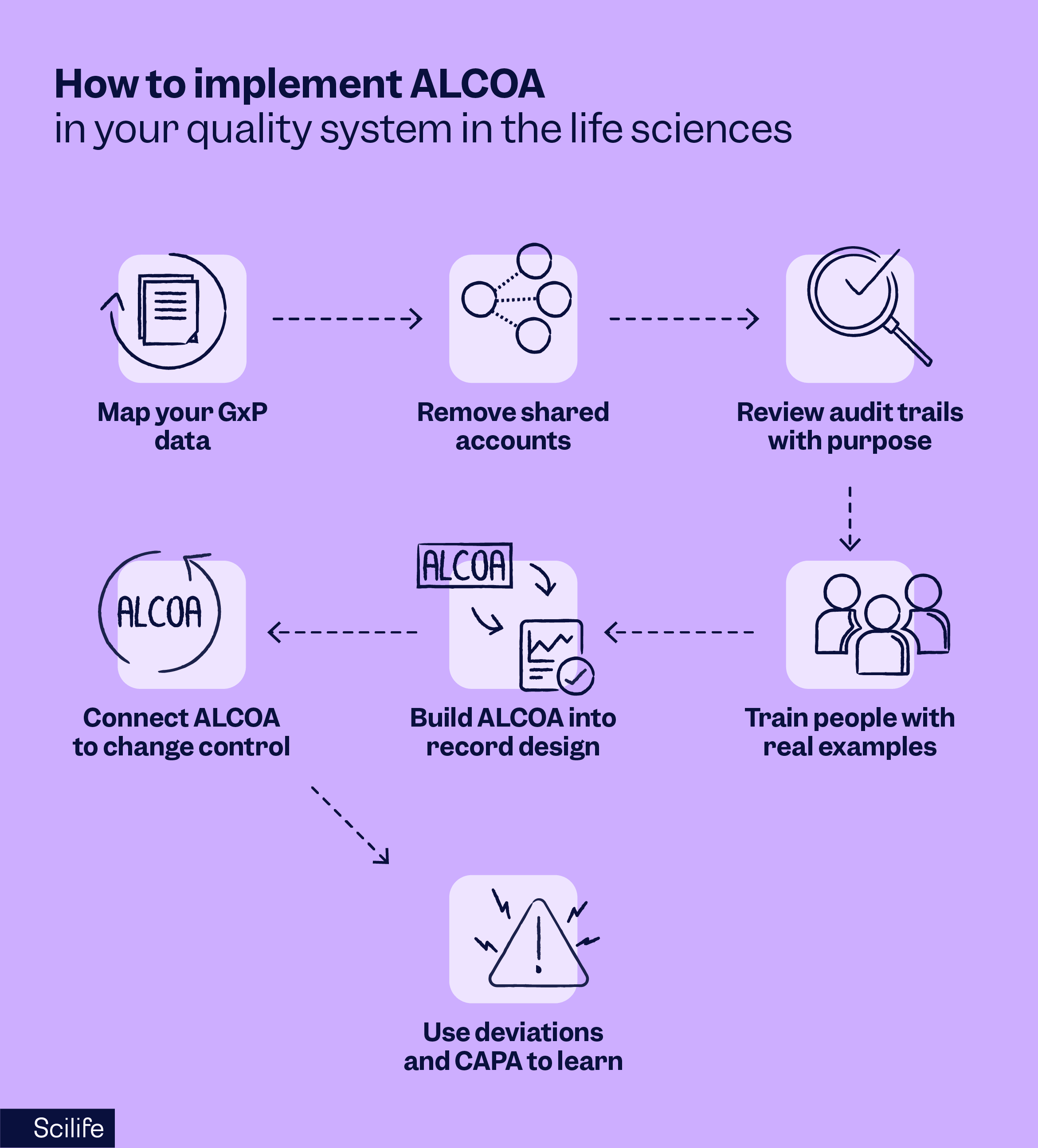
How to implement ALCOA in your quality system in the life sciences
Applying ALCOA should be practical. It should show up in procedures, training, system design, record review, and daily habits.
Here are the areas I would start with.
1. Map your GxP data
Start by listing where GxP data is created, reviewed, approved, stored, and archived.
This may include:
- Batch records
- Laboratory results
- Equipment logs
- Training records
- Deviations and CAPAs
- Change controls
- Validation records
- Supplier qualification records
- Clinical trial records
- Audit reports
Once you know where the data lives, you can assess whether each record type meets ALCOA principles.
2. Remove shared accounts
Shared accounts are one of the fastest ways to weaken attributable data.
Each user should have a unique login. Access should match the person’s role. Admin rights should be limited. When people leave the company or change roles, their access should be updated promptly.
This is basic, but it is still one of the issues that appears in audits.
3. Review audit trails with purpose
Audit trails should not exist only because the system has the feature. Someone needs to review them in a meaningful way.
Focus on changes that matter. Deleted data, changed results, repeated tests, modified timestamps, disabled controls, or late entries. A risk-based audit trail review is usually more useful than trying to review everything without context.
4. Train people with real examples
Generic data integrity training is easy to forget. Real examples make ALCOA easier to understand.
Show what a good correction looks like. Show why backdating is a problem. Show how missing metadata can weaken a result. Show how a shared login makes an investigation harder.
When people understand the why, behavior changes faster.
5. Build ALCOA into record design
Good record templates make good documentation easier.
Paper forms should include space for dates, signatures, reasons for correction, and review. Electronic workflows should guide users through required steps. Mandatory fields should be used where they make sense. Drop-downs and controlled lists can reduce variation.
The goal is to make the right action the easiest action.
Recommended learning:

6. Connect ALCOA to change control
System changes can affect data integrity. A software upgrade, instrument replacement, workflow change, or new integration may change how records are created or stored.
Change control should ask data integrity questions. Will audit trails still work? Will old records remain readable? Will metadata transfer correctly? Will permissions change?
7. Use deviations and CAPA to learn
When data integrity issues happen, treat them seriously but fairly. Not every issue is fraud. Many issues come from poor process design, weak training, unclear ownership, or systems that make the correct action difficult.
A good CAPA should fix the reason the issue happened, not only the record that exposed it.
Conclusion: How digital tools support ALCOA compliance
ALCOA is a practical way to protect trust in regulated data.
As life sciences teams move further into electronic systems, the expectations behind ALCOA+ and ALCOA++ become even more important. Quality teams need records that are traceable, readable, timely, original, accurate, complete, consistent, enduring, and available.
A modern eQMS can help by giving teams controlled workflows, electronic signatures, audit trails, version history, permission controls, and faster record retrieval. Software does not replace good quality culture, but it can make good data integrity habits easier to follow.
Scilife helps life sciences teams manage quality processes in one connected platform, from document control and training to deviations, CAPA, change control, and audits. When these processes are connected, ALCOA compliance becomes much easier to build into daily work rather than manage as a last-minute inspection exercise.