




<img height="1" width="1" style="display:none;" alt="" src="https://px.ads.linkedin.com/collect/?pid=489233&amp;fmt=gif">

Build MDR- and IVDR-ready products without compliance delays

Many MedTech teams build strong products, only to face costly delays and reworks when regulatory requirements surface late. Scilife is designed to support MDR, IVDR, ISO 13485, and FDA QMSR expectations from early development, helping you keep launches on track and innovation moving.

Ask our experts anything Explore Scilife for MedTech
Wheelchair illustration | Scilife
MiDiagnostics logo | Scilife
Duomed logo | Scilife
Peilivision logo | Scilife
De Ceunynck Logo | Scilife

Challenges in medical device quality management: the cost of late-stage compliance

Under MDR and IVDR, regulators expect clear evidence of design intent, traceability, and medical device compliance decisions throughout development. Yet many MedTech teams focus on design and development only, then scramble to reconstruct compliance evidence during submission—causing delays, extra requests, and findings.
Missed submissions due to design traceability gaps.

Costly rework and late-stage remediation.

Audit findings and Notified Body pushback.

Late review cycle additional evidence requests.

When you add compliance late, progress slows and risk compounds. Build it in early, and teams move faster, submit with confidence, and avoid costly surprises.
 

Build compliance in early, and avoid late-stage medical device compliance delays

MedTech and diagnostics teams must document compliance early to meet MDR and IVDR expectations. With Scilife you can make quality and regulatory decisions visible and traceable throughout development through a guided, low-risk implementation.

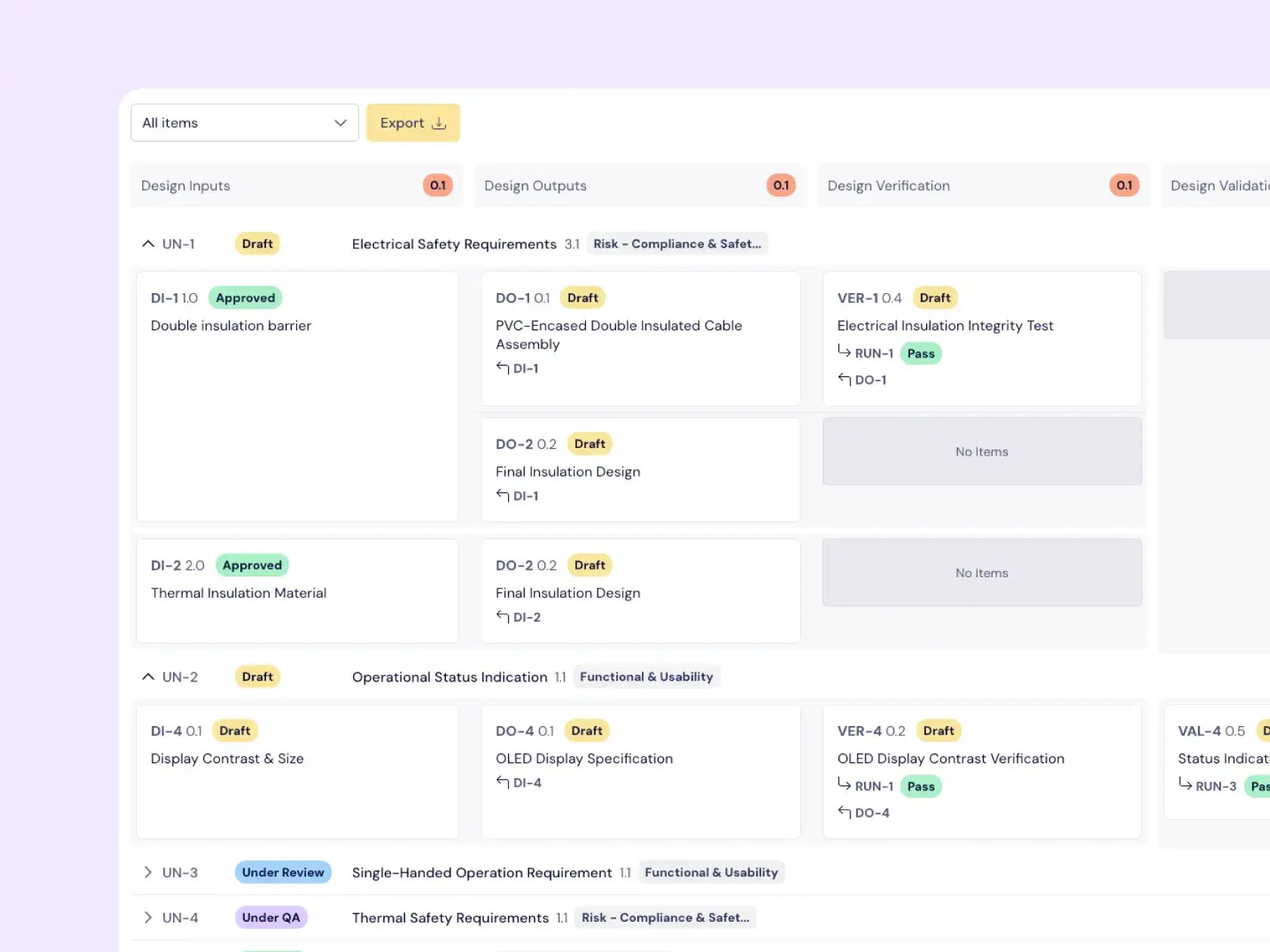
Clear traceability across design requirements | Scilife

Clear traceability across design requirements, outputs, versions, and approvals.

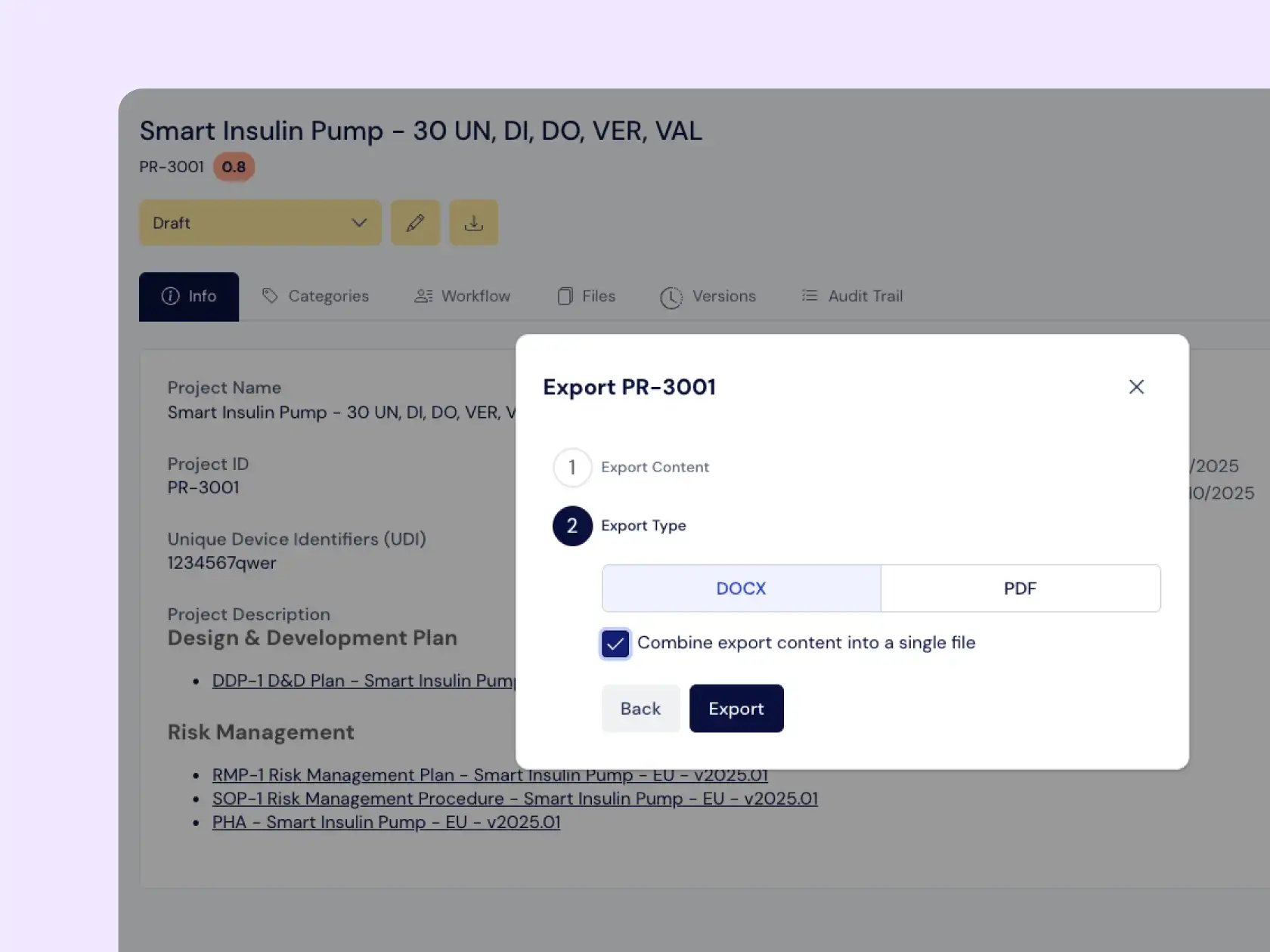
Submission-ready documentation aligned with regulations | Scilife

Submission-ready documentation aligned with MDR, IVDR, ISO 13485, and FDA QMSR.

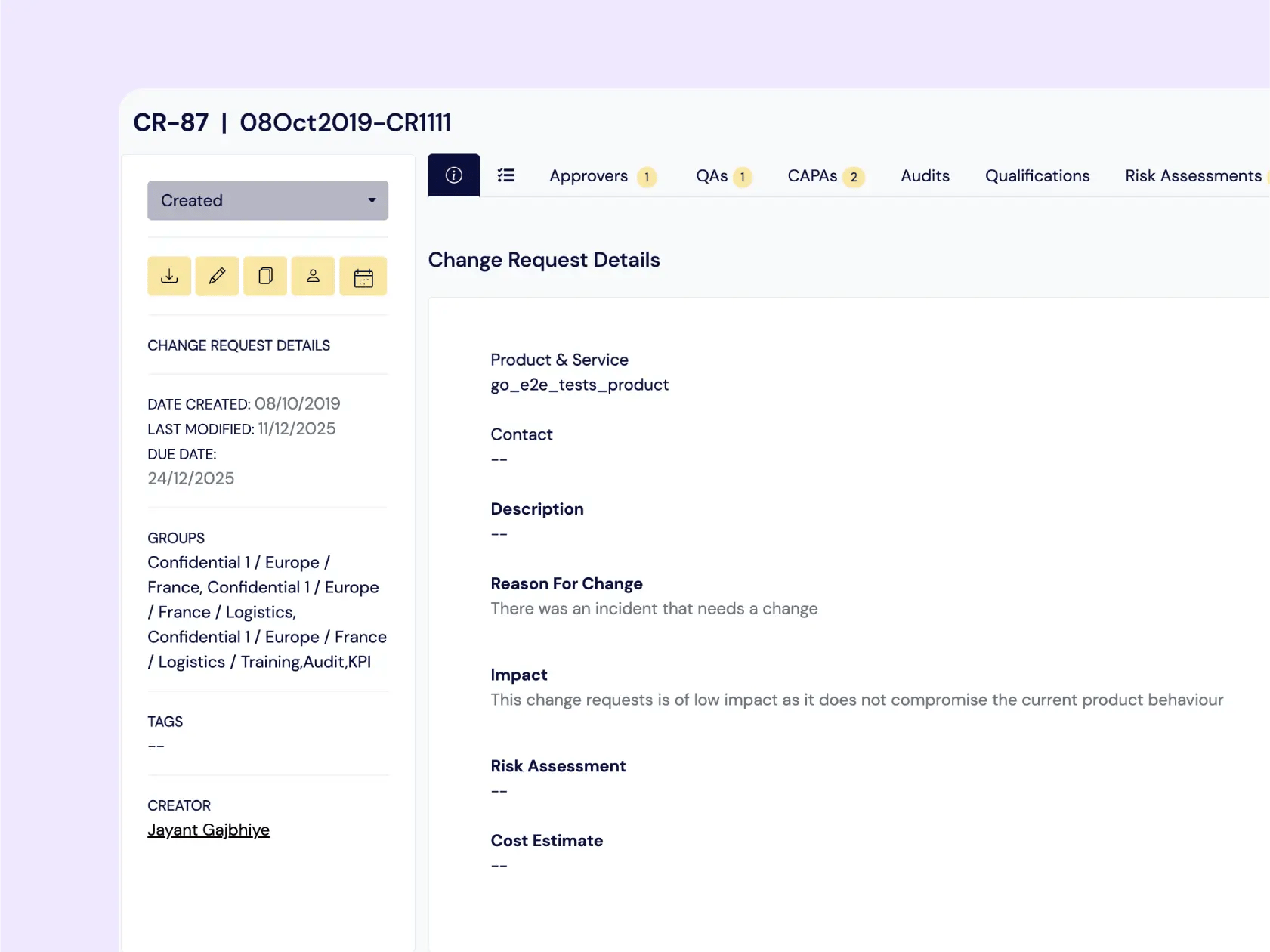
Scilife eQMS change management feature | Scilife

Structured change control with clear impact assessment.

Onboarding manager for easy adoption and inspection readiness | Scilife

Guided onboarding for early adoption and inspection readiness.

Up to 35%

faster batch preparation of submission-ready documentation

Up to 80%

reduction in traceability and documentation gaps

90 days

onboarding

Ask our experts anything Explore Scilife for MedTech

Made for MedTech teams — where submission readiness and traceability matter

Scilife is purpose-built for regulated MedTech environments, helping teams move fast while documenting decisions, maintaining traceability, and staying ready for regulatory review—without creating downstream compliance risk.

Why MedTech teams trust Scilife:

[Scilife]_MedTech-iconmedtech


—   Builds in compliance early, not as a pre-submission fix.
—   QA, R&D, and Regulatory alignment as designs evolve.
—   Documentation and traceability scale with product maturity.

Engineered for regulated device environments:

Ruler illustration to symbolize precision | Scilife


—   ISO 13485, MDR, IVDR, and FDA QMSR aligned.
—   Version control and audit trails for reviews and inspections.
—   Design and change control, and post-market workflows.
—   Simplified submissions and audit-ready documentation.
Magnifying glass with checkmark | Scilife

Scilife compliance and validation

See how Scilife approaches software validation and aligns with GAMP 5 and 21 CFR Part 11.

Read More  
Shield with data nodes | Scilife

Data security and recovery: let's get protected

Explore how Scilife secures its platform, manages access, and safeguards regulated data.

Read More  
Checklist with upward bar chart | Scilife

Scilife competitive advantages for medical device compliance

See how Scilife supports traceability, submissions, and regulated innovation.

Download the brochure  
Scilife switch for turning quality into your brightest asset | Scilife

Build devices that meet requirements — and get approved.

Don’t let your device be put on hold due to late compliance. 

Chat with an expert Explore Scilife for MedTech

FAQs

Is Scilife compliant with ISO 13485, MDR, IVDR, and FDA QMSR?

Yes. Scilife is aligned with ISO 13485, MDR, IVDR, and FDA QMSR expectations. The platform supports controlled documentation, version control, audit trails, and secure electronic signatures, helping MedTech and diagnostics teams maintain traceability and submission readiness throughout product development.

How does Scilife support compliance during medical device design and development?

Scilife helps MedTech teams document and manage design control requirements by centralizing design documentation, maintaining traceability, controlling changes, and supporting approval workflows. This ensures design development files remain complete, consistent, and audit-ready as products move toward regulatory submission.


What is design control traceability and why is it critical for MedTech companies?

Design control traceability links user needs, design inputs, outputs, verifications, and validations in a structured, auditable way. Without traceability, MedTech teams may face submission delays, audit findings, or regulatory pushback when evidence is incomplete or inconsistent.

How do MDR and IVDR increase documentation and traceability requirements?

Under MDR and IVDR, regulators expect stronger evidence that compliance is addressed throughout development, not just at submission. This includes clear documentation, controlled changes, and traceable design decisions. Building compliant documentation early helps teams meet these expectations without last-minute remediation.

Can small and growing MedTech teams manage medical device compliance without slowing innovation?

Yes. In fact, with the right system in place, early compliance and traceability speeds development and innovation as delays and rework are reduced. By building compliant documentation and traceability early, small and mid-sized MedTech teams reduce rework, avoid late-stage surprises, and keep product development moving efficiently.

How does Scilife help reduce rework before regulatory submission?

Rework often happens when documentation gaps are discovered late in development. Scilife helps teams reduce rework by maintaining structured, traceable design documentation throughout development, making it easier to prepare submission-ready records without rebuilding information under pressure.

Is Scilife suitable for European MedTech and diagnostics companies?

Yes. Scilife is designed to support European MedTech and diagnostics companies preparing for MDR and IVDR compliance, especially small to mid-sized teams. Its guided onboarding and structured workflows help teams scale compliance as products mature and regulatory expectations increase.

How does Scilife support audits and regulatory reviews?

Scilife supports audits and reviews by providing controlled documentation, version history, audit trails, and traceability across design of medical devices and quality records. This allows teams to retrieve evidence efficiently and respond confidently to auditor and regulator questions.

What happens if compliance gaps are identified after product launch?

If documentation and change history are unclear post-launch, investigations and corrective actions become more complex and resource-intensive. Maintaining clear, traceable records throughout development helps MedTech teams respond more effectively to post-market issues and regulatory inquiries.

How long does it take to get started with Scilife?

Scilife provides a guided, low-risk onboarding process tailored to MedTech teams. Most customers are able to configure core workflows and start using the platform within weeks, with full onboarding typically completed within 90 days depending on scope.

Can Scilife support teams as they grow from early development to submission?

Yes. Scilife is designed to scale with product maturity, allowing teams to start with core documentation and traceability needs and expand as regulatory requirements increase — without needing to rebuild or replace systems later.

When do medical device companies need to implement ISO 13485?

Medical device companies need to implement ISO 13485 when they are involved in one or more stages of the medical device life-cycle and need to demonstrate their ability to consistently meet both customer and applicable regulatory requirements. Under MDR and IVDR, regulators and Notified Bodies expect evidence that quality and regulatory requirements were considered throughout the product lifecycle, not introduced just before submission. If quality processes are only implemented late, teams often struggle to reconstruct design decisions, traceability, and change history.

Can MDR or IVDR documentation be managed using spreadsheets or SharePoint?

In early product development for medical technology, spreadsheets and shared drives can help teams move quickly. However, as regulatory expectations increase, these tools often become difficult to control and scale. Spreadsheets and file repositories typically lack structured traceability, controlled change history, and clear approval workflows. As a result, teams may struggle to demonstrate how requirements, design changes, and approvals are linked over time. MedTech teams should transition to a structured QMS when documentation volume grows or when submission timelines approach, to avoid late-stage remediation and rework.